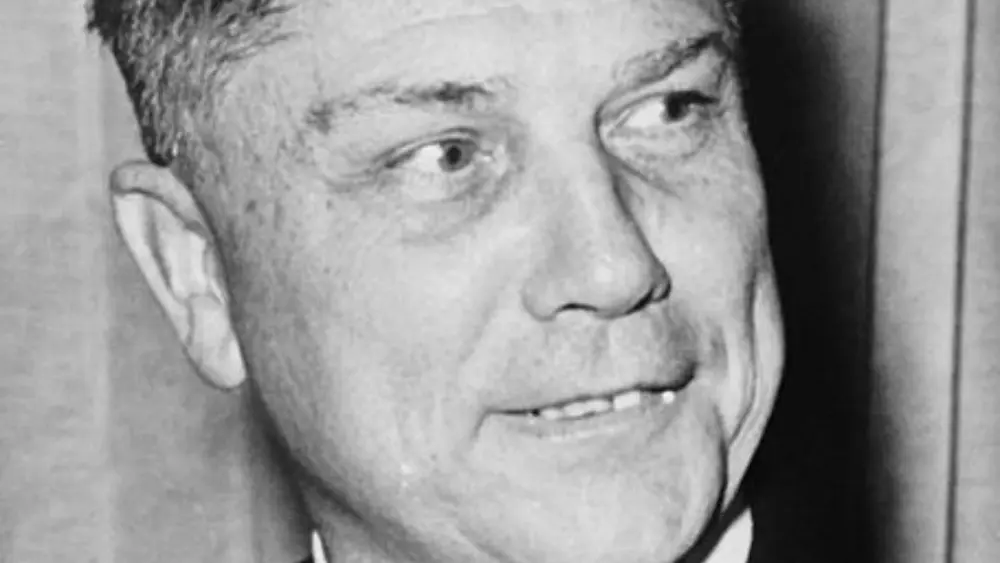
James Riddle Hoffa, commonly known as Jimmy Hoffa, was a prominent American labor union leader and president of the International Brotherhood of Teamsters (IBT). His significant impact on the labor movement, involvement with organized crime, and the enduring mystery surrounding his disappearance marked his life.
Early Life: From a Working-Class Background to Labor Activism
Born on February 14, 1913, in Brazil, Indiana, Jimmy Hoffa’s working-class family molded his early life. Growing up in an environment where the challenges of the working class were firsthand experiences, Hoffa developed a deep-seated commitment to advocating for the rights of laborers. These formative years laid the foundation for his lifelong dedication to labor activism and the pursuit of improved working conditions for blue-collar workers across the nation.
Hoffa’s upbringing instilled in him a keen awareness of the struggles faced by working-class families, and his passion for labor rights emerged as a powerful force during an era marked by significant economic and industrial changes. As he navigated the challenges of his early life, Hoffa’s commitment to representing the interests of workers would ultimately propel him to a prominent role within the labor movement, shaping his legacy as a formidable figure in the history of organized labor in the United States.
Jimmy Hoffa: Rising as a Labor Activist
From his early years, Jimmy Hoffa emerged as a forceful labor activist driven by a fervent commitment to advocating for the rights of workers. A deep-seated passion for addressing the challenges faced by blue-collar workers marked his rise in the labor movement, and he quickly became a vocal advocate for improved labor conditions. Hoffa’s early activism reflected his understanding of the struggles of the working class, and he sought to mobilize and empower laborers to demand fair treatment, better wages, and improved working environments.
His charismatic leadership style, which resonated with many workers seeking representation and fair treatment in a rapidly changing industrial landscape, propelled Hoffa’s ascent in the labor movement. His efforts laid the groundwork for his later role as a prominent figure in organized labor, and the early years of his activism showcased the tenacity and determination that would define his legacy within the broader context of labor rights in the United States.
Union Leadership: President of the Teamsters
Jimmy Hoffa’s pivotal role in the labor movement reached its zenith when he assumed the presidency of the International Brotherhood of Teamsters, a position that would define his legacy in the annals of organized labor. As the head of one of the largest and most influential labor unions in the United States, Hoffa wielded considerable influence over the rights and conditions of workers across various industries. His presidency marked a period of significant growth and consolidation for the Teamsters, transforming it into a formidable force that effectively represented the interests of its diverse membership.
Under Hoffa’s leadership, the Teamsters expanded their reach and impact, negotiating collective bargaining agreements and securing improved working conditions for a vast number of workers. Hoffa’s strategic approach to labor negotiations and his unyielding commitment to the well-being of union members earned him both staunch supporters and formidable adversaries. The presidency of the Teamsters not only elevated Hoffa’s status within the labor movement but also brought him into the spotlight as a central figure in national discussions about workers’ rights and the dynamics between labor and management.
Jimmy Hoffa: Transforming the Teamsters into a Powerful Force
Jimmy Hoffa’s impact on the International Brotherhood of Teamsters during his tenure as president was nothing short of transformative. Under his leadership, the Teamsters evolved into a powerful force that exerted significant influence in labor negotiations. Hoffa’s adept negotiation skills and unwavering commitment to the welfare of union members were instrumental in securing improved wages, benefits, and working conditions for the diverse array of workers represented by the Teamsters.
Hoffa’s ability to navigate complex negotiations with employers and his strategic approach to labor issues elevated the Teamsters’ standing within the broader labor movement. The union, under his guidance, became known for its effectiveness in championing the rights of workers across various industries. Hoffa’s legacy within the Teamsters is marked by a period of expansion and consolidation, establishing the union as a force to be reckoned with in the ongoing struggles for workers’ rights and fair labor practices.
Labor Strikes and Negotiations: Hoffa’s Impact on Workers’ Rights
Jimmy Hoffa’s legacy in the realm of workers’ rights is closely tied to his active involvement in numerous labor strikes and negotiations. Known for his assertive and aggressive approach, Hoffa was a tenacious advocate for better working conditions and fair treatment of workers. He fearlessly confronted management and tirelessly fought for the rights of union members, earning both admiration and criticism for his unyielding stance in the face of powerful corporate interests.
Hoffa’s impact on workers’ rights extended beyond the negotiating table; he became a symbol of resilience for the labor movement. His advocacy contributed to the establishment of crucial precedents that influenced labor practices and shaped the broader discourse around workers’ rights. While Hoffa’s methods and style were controversial, there is no denying his significant role in challenging the status quo and advancing the cause of American workers during a pivotal era in labor history.
Jimmy Hoffa: Connections to Organized Crime: Allegations and Legal Troubles
Jimmy Hoffa’s legacy is notably marred by allegations and legal troubles stemming from his connections to organized crime figures, particularly members of the Mafia. The perception of Hoffa’s involvement with criminal elements cast a shadow over his leadership in the labor movement. Accusations of corruption and collusion with the underworld tarnished his reputation and led to a series of legal battles that would define the latter part of his career.
The controversies surrounding Hoffa’s alleged ties to organized crime not only raised questions about the integrity of his leadership but also placed him squarely in the crosshairs of law enforcement. The legal troubles that ensued would have significant consequences for Hoffa, ultimately culminating in his imprisonment. This chapter in his life further underscores the complexity and challenges Hoffa faced as a prominent figure in the labor movement during a tumultuous period in American history.
Allegations and Legal Scrutiny
Jimmy Hoffa faced intense legal scrutiny and investigations due to his alleged connections to organized crime. The media coverage surrounding these allegations significantly impacted his public image, overshadowing his achievements in the realm of labor activism. The accusations of corruption and collaboration with criminal elements created a turbulent narrative around Hoffa, marking a challenging chapter in his career.
The legal challenges further complicated Hoffa’s legacy, leaving a lasting impact on how he is remembered. The intertwining of labor activism with allegations of wrongdoing highlights the complexities and controversies that surrounded Hoffa’s life, making him a figure whose legacy is both celebrated for his contributions to workers’ rights and scrutinized for the cloud of suspicion that surrounded him.
Jimmy Hoffa: Imprisonment and Presidential Pardon
Jimmy Hoffa’s imprisonment in 1967 marked a significant downturn in his career, as he faced convictions for jury tampering, attempted bribery, and fraud. The charges were a result of his alleged involvement in corrupt practices within the labor movement. Hoffa’s time behind bars was a challenging period for the influential labor leader as he navigated legal battles and the repercussions of his actions.
However, Hoffa’s fortunes took an unexpected turn when President Richard Nixon commuted his sentence in 1971, allowing him an early release from prison. The commutation came with the stipulation that Hoffa would refrain from engaging in union activities for the next ten years. This presidential intervention added another layer of complexity to Hoffa’s story, raising questions about the nature of his relationship with political figures and the extent of his influence within the corridors of power.
Commutation and Temporary Exile from Union Activities
Following his release from prison in 1971, Jimmy Hoffa’s commutation and temporary exile from union activities represented a significant chapter in his turbulent life. While the commutation granted him freedom, the condition imposed by President Richard Nixon prevented Hoffa from immediately returning to the labor movement that had been the focal point of his career. This restriction altered the course of his post-imprisonment journey, forcing Hoffa to navigate a landscape where he couldn’t fully exercise the influence he had wielded as the president of the Teamsters.
The period of temporary exile from union activities also raised questions about the extent of government intervention in labor affairs and the delicate balance between political power and the influence of labor leaders. Hoffa’s ability to navigate this challenging phase would ultimately shape the latter part of his legacy, adding another layer to the complex narrative of a man whose life was intertwined with the highs and lows of organized labor and its intersection with broader political forces.
Jimmy Hoffa: Hoffa’s Vanishing Act
Jimmy Hoffa’s vanishing act on July 30, 1975, remains one of the most enigmatic and enduring mysteries in American history. The former Teamsters president was last seen outside the Machus Red Fox restaurant in Bloomfield Township, Michigan, and from that point on, his fate became shrouded in uncertainty. The mysterious circumstances surrounding Hoffa’s disappearance have given rise to numerous theories and speculations, ranging from involvement with organized crime to political conspiracies.
The absence of concrete evidence and the lack of a definitive resolution to the case have fueled decades of intrigue, capturing the public’s imagination and contributing to Hoffa’s mystique. The unanswered questions surrounding his disappearance have become an integral part of Hoffa’s legacy, overshadowing his achievements as a labor leader and creating an enduring aura of mystery around his name.
Vanishing Without a Trace
Jimmy Hoffa’s disappearance on July 30, 1975, is a compelling enigma that continues to captivate the public’s imagination. Vanishing without a trace from the parking lot of the Machus Red Fox restaurant in Bloomfield Township, Michigan, Hoffa left behind a void that has fueled decades of speculation and intrigue. Despite extensive investigations and numerous theories, the circumstances surrounding his disappearance have defied resolution, contributing to the enduring mystique surrounding Hoffa.
The lack of conclusive evidence and the absence of a clear explanation for his vanishing act have given rise to a multitude of theories, ranging from connections to organized crime to elaborate political conspiracies. This unresolved chapter in Jimmy Hoffa’s life has become a defining element of his legacy, overshadowing his significant role in labor activism and leaving a remarkable mark on American history. The mystery surrounding Hoffa’s disappearance persists, ensuring that his name remains synonymous with one of the greatest unsolved mysteries in the nation’s history.
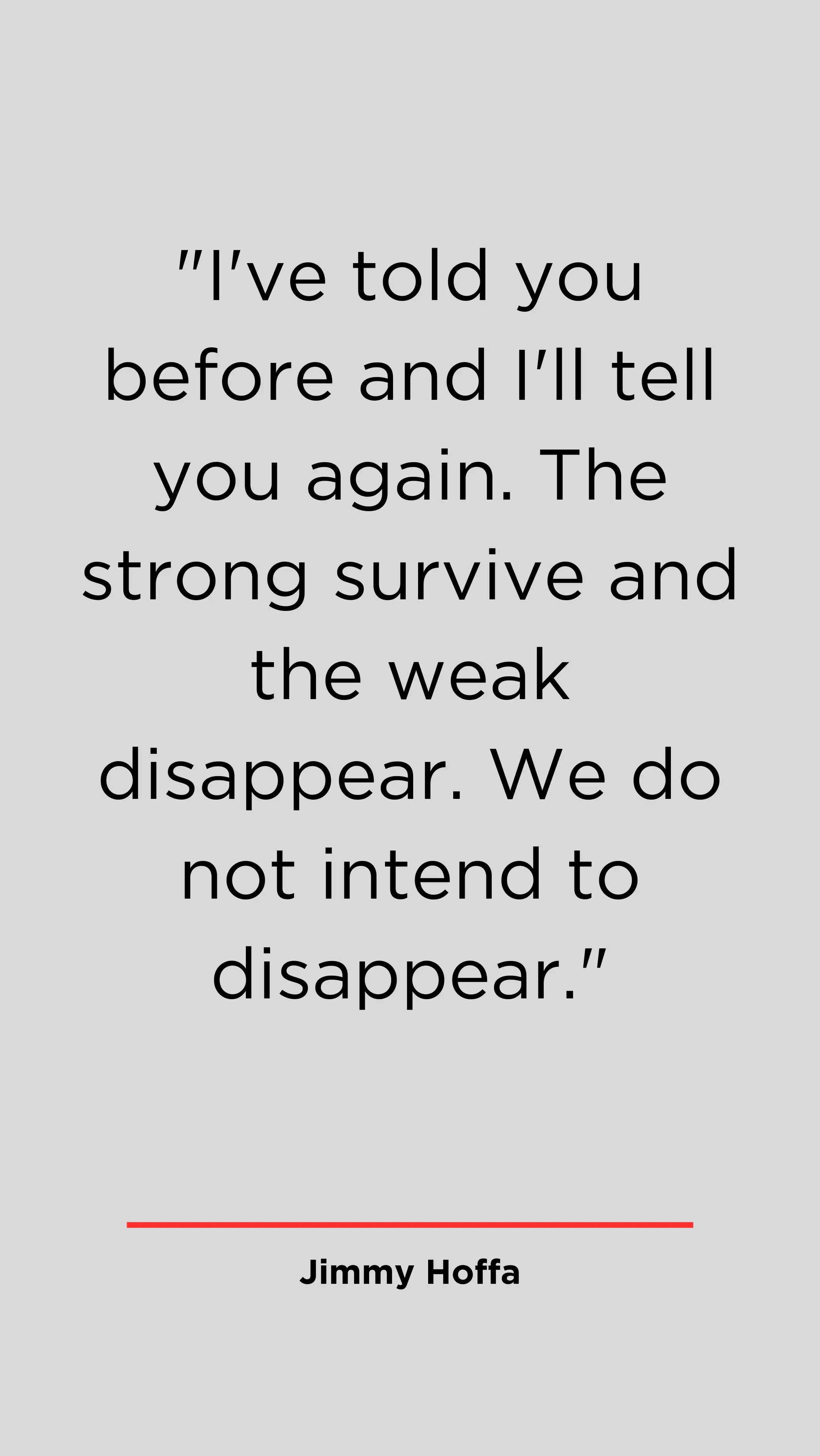
Legacy: Impact on Labor, Controversy, and Enduring Mystery
Jimmy Hoffa’s multifaceted legacy weaves threads of labor activism, controversy, and an enduring mystery. As the president of the International Brotherhood of Teamsters, Hoffa played a pivotal role in transforming the Teamsters into a powerful force, advocating for improved wages and benefits for workers. His tenacity in negotiating for the rights of union members characterizes his legacy in the labor movement, leaving an impact on the landscape of organized labor.
However, controversy marks Hoffa’s legacy as his associations with organized crime figures and the subsequent legal troubles cast a shadow over his achievements. The unresolved mystery of his disappearance in 1975 further complicates his legacy, turning him into an enigmatic figure whose life and career intertwine with one of the greatest unsolved mysteries in American history. The enduring interest in Hoffa’s legacy speaks to the complexity of his persona, making him a figure whose impact on labor, controversies, and the mystery surrounding his disappearance continue to captivate generations.